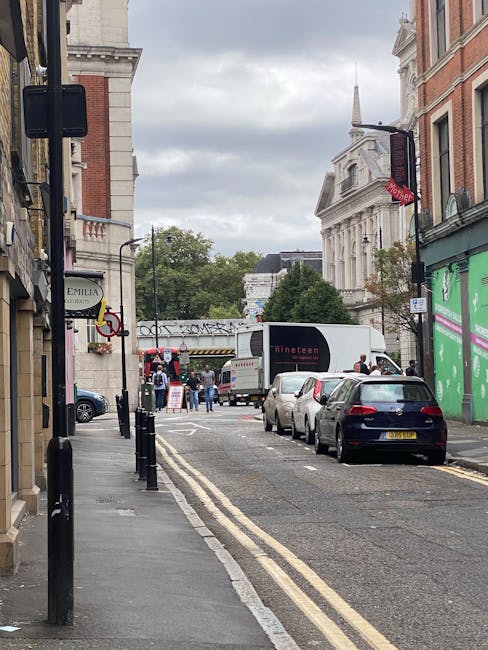
Brixton Station quick removals and loading bay advice
If you are trying to move near Brixton Station, the difference between a smooth job and a stressful one often comes down to timing, access, and how well you use the loading bay. Brixton is busy, tight for kerb space, and rarely forgiving if you arrive unprepared. This guide on Brixton Station quick removals and loading bay advice brings together practical planning tips, loading strategies, and local common sense so you can get in, load up, and get out without turning a short move into an all-day headache.
Whether you are shifting a flat, clearing a small office, collecting furniture, or arranging a same-day pickup, the aim is simple: reduce waiting, avoid awkward parking mistakes, and keep your move moving. You will also find useful guidance on when to choose a man and van service, how to prepare items for a fast turnaround, and what to think about before the vehicle even turns onto the street. Let's face it, in Brixton, five minutes of planning can save you an hour of faffing about.
Quick takeaway: if your move involves Brixton Station, plan for narrow roads, busy footfall, limited stopping time, and a loading bay that may be shared with other road users. Arrive ready, keep items grouped, and use a vehicle sized for the job rather than one that is awkward to park. That small bit of judgement makes a big difference.
Table of Contents
- Why Brixton Station quick removals and loading bay advice matters
- How Brixton Station quick removals and loading bay advice works
- Key benefits and practical advantages
- Who this is for and when it makes sense
- Step-by-step guidance
- Expert tips for better results
- Common mistakes to avoid
- Tools, resources and recommendations
- Law, compliance, standards, or best practice
- Options, methods, or comparison table
- Case study or real-world example
- Practical checklist
- Conclusion
- Frequently asked questions
Why Brixton Station quick removals and loading bay advice Matters
Brixton Station sits in one of south London's busiest, most movement-heavy pockets. People are arriving for work, heading out with shopping, crossing the road, queuing for transport, and generally making the space feel alive from early morning to late evening. That is great for the area, but it also means removal jobs can become awkward very quickly if you treat the location like a quiet residential street.
For quick removals, the loading bay is usually the key control point. It gives you a structured place to stop, load, and move on without blocking traffic or forcing the crew to carry items further than needed. In practice, that means the quality of your loading bay plan affects everything else: speed, safety, parking risk, customer stress, and even the condition of the furniture itself.
A lot of people underestimate this part. They focus on boxes, tape, and the destination address, then arrive to find the van is too big for the bay, the lift from the station area is longer than expected, or the items are not ready by the kerb. That is when a straightforward job starts to feel messy. If you've ever stood on a pavement holding a sofa cushion while checking your phone and wondering where the keys went, you'll know the feeling.
Good advice here is not about being precious. It is about reducing friction. Near Brixton Station, that matters because the margins are tight. The best moves are the ones that feel almost boring by the end. Load. Secure. Leave. No drama. No double handling. No guessing.
How Brixton Station quick removals and loading bay advice Works
At a practical level, a quick removal near Brixton Station usually follows a simple pattern: the vehicle arrives, the loading bay or stopping point is used efficiently, items are carried straight from the property or pickup point into the van, and the vehicle moves off as soon as it is safe. The whole point is to compress the handover so the van is not sitting around longer than it needs to.
The loading bay acts like a short-term work zone. You are not there to unpack, sort, or make decisions item by item. You are there to use a short window well. That means preparation before arrival matters more than people expect. Boxes should already be sealed, fragile items protected, and heavy pieces placed so they can go first or last depending on the route inside the property. The team should know which items are going and which are staying. Simple, but it saves a surprising amount of time.
In local terms, quick removals around Brixton Station often work best when the vehicle is sized correctly. A compact van may be easier to position and less stressful in tight spaces, while a larger vehicle might reduce trips but be harder to place safely. That balance is different for every move. A small flat move with a few key items may suit a removal van, while a bigger clear-out or office move may need something closer to a moving truck.
There is also a human side to it. Quick jobs near transport hubs often involve landlords, tenants, shop staff, office managers, commuters, or building residents all trying to work around the same narrow slot. So communication matters. If the person at the property knows the vehicle is ten minutes away, and the loading bay plan is already agreed, the job tends to feel much calmer. Funny how that works.
Key Benefits and Practical Advantages
The big advantage of getting loading bay advice right is speed, but speed is only part of the story. The real benefits are a mix of operational efficiency and peace of mind. Here is what improves when the plan is sound:
- Less waiting time: the vehicle is in the right place at the right moment, so the crew can start loading immediately.
- Lower stress: everyone knows the sequence, which means fewer last-minute decisions on the pavement.
- Better item protection: furniture and boxes are moved in a controlled flow rather than being shuffled around in a rush.
- Reduced parking risk: a proper loading plan helps avoid awkward stops, fines, or moving the vehicle twice.
- Cleaner handovers: ideal for tenants, landlords, and office managers who need the move wrapped up quickly.
- Fewer handling errors: items are loaded once, not lifted, set down, and lifted again because the van space was not thought through.
There is also a commercial benefit. If you are comparing removal services, the ones that understand station-area access tend to make better use of time, which can keep the whole job more efficient. That does not always mean the cheapest quote is the best value. Sometimes the cheaper option costs more in delay, and nobody enjoys paying for confusion.
For smaller jobs, a quick, organised approach is especially useful. A single sofa, a few boxed items, or a short-notice flat move can often be completed faster when the vehicle and loading point are matched well. For bigger changes, the advantage is more about coordination. The less time spent waiting on the street, the more predictable everything becomes.
Who This Is For and When It Makes Sense
This kind of guidance is useful for a lot more people than you might think. It is not just for people moving house. In fact, some of the most time-sensitive jobs around Brixton Station are the small ones where nobody wants a huge production.
You will find it especially helpful if you are:
- moving from a flat near the station and need a fast, tidy pickup
- collecting or delivering furniture with limited curbside time
- arranging a student move and trying to keep costs and hassle down
- clearing out an office or retail unit with access constraints
- needing a same-day or short-notice collection
- moving bulky items that need a short carry from the property to the van
It also makes sense if you are managing a building or letting property and want the move to happen without upsetting neighbours or blocking entrances. Brixton can be noisy and lively, yes, but that does not mean your move has to add to the chaos.
For example, a tenant leaving a two-bed flat may only have a few large items and a stack of boxes. In that case, a flat removals approach is usually more practical than overcomplicating the job. On the other hand, an office near the station with desks, screens, archive boxes, and chairs may need office removals support and a stronger loading plan. Different jobs, different rhythm.
Step-by-Step Guidance
If you want the simplest route to a quick, tidy removal near Brixton Station, follow this sequence. It sounds basic, because it is. But basic done properly is what wins the day.
1. Confirm the exact pickup point
Before anything else, make sure you know where the vehicle can stop. Is it the loading bay, the front of the building, or a side street nearby? Do not assume the first open kerb space will be usable. Around stations, that assumption is how people lose time.
2. Match the vehicle to the job
Choose a van or truck that fits the volume without being awkward for the space. A compact vehicle can be easier for short urban stops, while a larger load space may reduce repeat trips. The right option depends on what you are moving and how much room the street gives you.
3. Pre-pack for fast loading
Label boxes, protect corners, and separate fragile items from heavy ones. If the move is genuinely quick, items should be grouped by loading order, not by what looked tidy at the time. That way, the most awkward objects do not become a puzzle at the kerb.
4. Clear the route from property to van
Open doors, move obstacles, and make the path as direct as possible. A small cluttered hallway can eat more time than people expect. One of those tiny details that suddenly matters a lot.
5. Load the heaviest items first, sensibly
There is no universal loading pattern, but the usual aim is to distribute weight well and protect fragile items. Heavy items often go in first, with softer items and boxes packed around them. If the move involves furniture, a dedicated furniture removals approach is often safer than treating everything as loose cargo.
6. Secure the load before moving off
Straps, blankets, and sensible stacking all help. A van should not feel like a moving game of Jenga. If items slide during transport, you risk damage and delay, and nobody wants to reopen the job because a cabinet took a knock.
7. Leave the bay promptly
Once the load is complete, move away from the stop point quickly and cleanly. That courtesy matters in Brixton, where space is a shared resource. It also keeps your move from drifting into a longer, more expensive job than necessary.
Expert Tips for Better Results
In our experience, the best quick removals are not the flashiest ones. They are the ones where the crew arrives with a plan and the customer has done just enough prep to make the plan work. That small overlap is where everything gets easier.
- Use one central staging area inside the property: even a small hallway or living room corner can become a loading point if it is kept clear.
- Keep essentials separate: if you need keys, documents, chargers, or medication, do not bury them in a random box. It sounds obvious until the last ten minutes.
- Measure awkward furniture before moving day: not every sofa or wardrobe deserves to discover Brixton's narrow stairs the hard way.
- Book the right time window: earlier can be calmer, but the best slot depends on your building, neighbours, and access pattern.
- Tell the crew about lifts, stairs, or narrow corridors: a five-second warning can save five minutes of carrying.
- Have a backup plan for bay unavailability: if the loading bay is occupied, know the nearest sensible fallback option.
A lot of people ask whether they should try to do it all themselves to save money. Sometimes yes. Sometimes no. If the move is small and simple, a man with van arrangement can be a practical middle ground. If you have awkward furniture, little time, or multiple pickup points, it may be smarter to use a more structured service rather than improvising on the day.
One more thing: keep your tone calm and clear with everyone involved. Drivers, neighbours, reception staff, and building managers all respond better when nobody is trying to sound heroic. A polite, direct approach works. Every time, almost annoyingly so.
Common Mistakes to Avoid
The same mistakes show up again and again, and they are usually avoidable. Here are the ones that cause the most trouble near Brixton Station.
- Arriving without checking access: the loading bay might not be where you imagined, or it may already be in use.
- Bringing the wrong size vehicle: too small means extra trips; too large can mean awkward manoeuvring.
- Underestimating carry distance: a short move can still involve a surprisingly long walk from door to van.
- Leaving items unpacked: loose bits and fragile ends slow everything down and increase breakage risk.
- Not protecting furniture: one scrape against a doorway can turn a quick move into a repair job.
- Forgetting building rules: some properties have narrow access windows or specific requirements for service vehicles.
- Trying to sort on the pavement: that is how a quick job becomes a noisy, inefficient one.
Truth be told, a lot of these mistakes come from optimism. People think, "It will be fine, we'll just get it done." Sometimes that works. Near Brixton Station, though, optimism without structure tends to get eaten by traffic, footfall, and the realities of local access.
Tools, Resources and Recommendations
You do not need a warehouse of gear to do this well. A small toolkit and a sensible setup are usually enough. The main thing is that the tools are there before you need them.
| Tool or item | Why it helps | Best used for |
|---|---|---|
| Sturdy boxes | Keeps items grouped and easier to stack | Flat moves, student moves, office files |
| Packing tape | Stops boxes opening during transit | General packing |
| Furniture blankets | Reduces scratches and knocks | Tables, cabinets, white goods |
| Straps | Secures items inside the vehicle | Any van load with mixed shapes |
| Labels or marker pen | Makes unloading faster and less confusing | Fast-turnaround moves |
| Dolly or sack truck | Speeds up heavier item movement | Boxes, appliances, stacked items |
If you need help with packing, it can be worth considering packing and boxes support or a more complete packing and unpacking services option, especially when the move is time-sensitive. That is one of those services that feels optional until the clock starts ticking. Then it suddenly looks rather smart.
For larger or more awkward jobs, using the right type of provider also matters. If you need broader support than a single collection, look at removals or removal services rather than trying to patch together the move yourself from bits and pieces. The aim is not to overbuy. The aim is to buy the right amount of help.
Storage can also be a practical fallback if access timing is messy or your completion date is not ideal. In those cases, a storage option can keep the move flexible instead of forcing a bad schedule.
Law, Compliance, Standards, or Best Practice
For any removal near a station, you should treat road safety, property access, and secure loading as non-negotiable basics. In the UK, that usually means following normal road rules, avoiding obstruction, and respecting any local restrictions that apply to loading or stopping. You do not need to become a transport lawyer to move a sofa, but you do need to behave like a responsible road user.
Best practice also includes using suitable equipment, keeping walkways clear where possible, and making sure items are lifted and carried in a way that reduces the chance of injury. A professional team should work in line with its own health and safety procedures. If you are choosing a provider, it is sensible to check their approach to health and safety policy and insurance and safety before booking.
That is especially relevant for awkward items, tight stairwells, and busy roadside loading. A careful team will not rush simply because the job is short. They will move efficiently, yes, but with control. There is a difference, and you can usually feel it within the first few minutes on site.
If your move involves business premises, building access, or multiple stakeholders, a little more formal coordination helps. For those situations, commercial moves and office relocation services are often better suited than a casual one-off approach.
Options, Methods, or Comparison Table
Not every move near Brixton Station needs the same setup. Here is a simple comparison to help you choose the right style of support.
| Option | Best for | Pros | Trade-offs |
|---|---|---|---|
| Small van / man and van | Single pickups, flat moves, short notice jobs | Flexible, quick to position, often efficient | Less capacity for larger loads |
| Larger removal van | Medium household moves, mixed items | More room, fewer trips | Can be harder to place in tight spaces |
| Moving truck | Bigger removals or multiple bulky items | Best for volume and structured loading | May need extra planning around access |
| Specialist removals support | Furniture, offices, awkward or valuable items | More tailored handling and coordination | Can be more than you need for very small jobs |
If your job is small, man and van services often provide the most balanced mix of speed and practicality. If the job is a single bulky item, furniture pick up may be all you need. If the move is a whole-home event, then home moves or house removals support becomes more relevant.
Case Study or Real-World Example
Here is a realistic example. A tenant in a second-floor Brixton flat needs to move out before midday, and the building is a short walk from the station. The move includes a bed frame, a small sofa, two chests of drawers, and about a dozen boxes. Nothing outrageous. But the street is busy, the access window is tight, and the loading bay is shared.
The best approach is to pre-pack the boxes the night before, group the furniture in the living room, and confirm the collection time early. On the day, the vehicle arrives with blankets, straps, and the right crew size. The first load goes straight to the van. The drawers are wrapped before being carried. The sofa is moved with clear footing rather than squeezed through a cluttered hall. The loading bay is used efficiently, and the vehicle is away quickly. Not glamorous. But smooth.
In a different version of the same scenario, the customer leaves the packing until the driver arrives, the items are spread across three rooms, and nobody has agreed what goes first. The van waits, the bay time gets eaten up, and the whole job feels rushed for no real reason. Same address, same street, very different result.
That contrast is the whole story. Quick removals are rarely about moving faster in a reckless way. They are about removing the little delays that slow everything down.
Practical Checklist
Use this checklist before your Brixton Station pickup or drop-off. It is simple, but it catches the details people tend to miss.
- Confirm the exact loading bay or stopping point
- Check the time window available for loading
- Choose the right vehicle size for the load
- Group items by room or by loading order
- Pack fragile items securely
- Keep keys, documents, and essentials separate
- Clear hallways and entrances before arrival
- Tell the crew about stairs, lifts, or tight turns
- Use protective covers for furniture where needed
- Have a backup plan if the bay is occupied
- Keep contact details to hand in case timing shifts
- Walk through the property one last time before leaving
If you are moving belongings that are not needed immediately, it may also be worth planning for student removals style simplicity or adding a storage stop. And if it is a heavier item like a piano or a large cabinet, specialist handling matters more than shaving a few minutes off the schedule. That is just common sense, really.
Conclusion
Brixton Station quick removals and loading bay advice is ultimately about respect for time, space, and the realities of a busy London location. The station area rewards people who arrive ready, load efficiently, and move on without making life harder for everyone else. If you plan the access point, choose the right vehicle, and prepare items properly, you will usually find the whole process feels far more manageable than expected.
That is the real win here. Not simply getting the job done, but getting it done without the last-minute scramble, the awkward reshuffling, or the sinking feeling that something important was overlooked. A well-planned move near Brixton Station can be quick and calm. A bit of structure goes a long way.
Get a free quote today and see how much you can save.
And if you are still weighing up the best approach, take it one practical step at a time. The move does not need to be perfect. It just needs to be organised enough to work, and that is absolutely achievable.
Frequently Asked Questions
What is the main challenge with removals near Brixton Station?
The main challenge is limited space combined with heavy foot and vehicle traffic. That means loading bay timing, vehicle size, and preparation matter more than they would on a quiet residential street.
How do I use a loading bay efficiently for a quick removal?
Have everything packed and ready before the vehicle arrives, keep the route clear, load in a sensible order, and leave the bay as soon as the job is complete. The bay should be treated as a short work zone, not a holding area.
Is a man and van service enough for a Brixton Station move?
Often, yes, if the move is small to medium and the access is manageable. A man and van setup is especially useful for flats, smaller furniture loads, and short-notice jobs.
Should I choose a larger vehicle to save time?
Not always. A bigger vehicle can reduce trips, but it may be harder to position near the station. The best choice is the one that balances capacity with access.
What should I pack first for a fast removal?
Pack non-essential items first, then group boxes by room or priority. Keep essentials, documents, and anything you need immediately in a separate bag or clearly marked box.
Can I arrange same-day removals near Brixton Station?
Sometimes, yes. It depends on availability, access, and the size of the job. For urgent situations, same-day removals can be a practical option when time is tight.
What if the loading bay is already occupied?
Have a fallback plan. That might mean waiting briefly, using an alternative stopping point if permitted, or adjusting the pickup timing. It is better to plan for this than to improvise under pressure.
Do I need specialist help for furniture moves?
If the items are bulky, valuable, or awkward to carry, specialist help is worth considering. Services such as furniture removals can reduce the risk of damage and save time.
How can I reduce the risk of damage during loading?
Use blankets, straps, and sturdy boxes, and make sure items are not loose in the van. Careful stacking and secure loading make a huge difference, especially on short urban jobs.
What kind of move is best suited to a loading bay plan?
Any move where access is tight, the street is busy, or you want to keep the vehicle off the main road for as little time as possible. That includes flat moves, furniture collections, office clear-outs, and many student moves.
Is there a difference between removal services and removals?
In practice, the terms are often used broadly, but some people use removal services for the general service and removals for the overall move itself. The important thing is to match the support to the job.
When should I book a storage option instead of moving everything at once?
Choose storage when your dates do not line up neatly, when access is limited, or when you need flexibility between properties. It can make a complicated move much easier to manage.